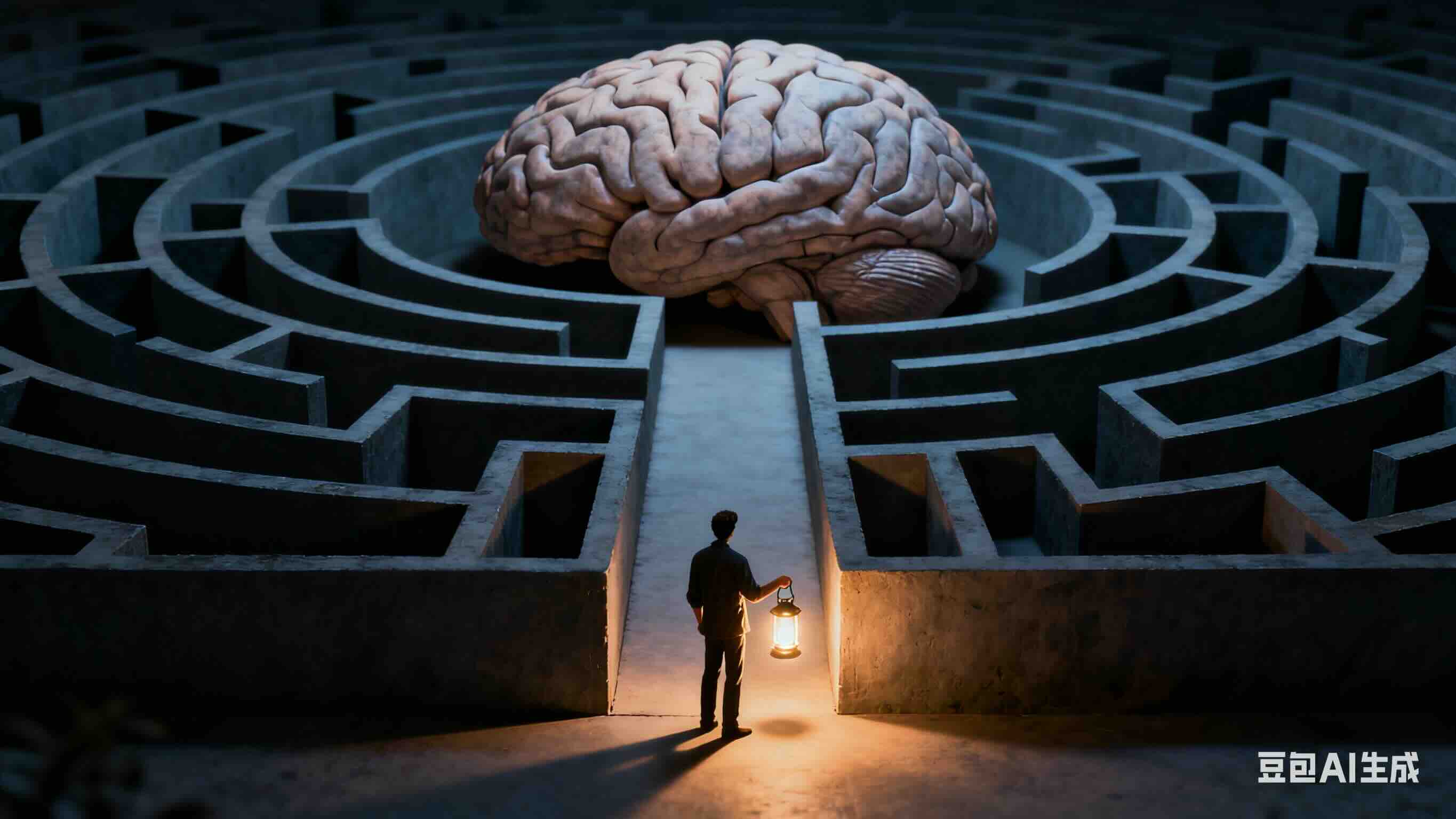
Have you ever looked back on a past decision—a failed relationship, a poor investment, a career move that went sideways—and wondered, "What on earth was I thinking?" You're not alone. We all make bad decisions, and it's often not because we lack intelligence, but because our brains have a built-in set of mental shortcuts known as cognitive biases.
These biases are predictable patterns of error that cloud our judgment. They aren't a sign of weakness; they're a fundamental part of how the human mind works. The good news is, while we can never completely eliminate them, we can learn to recognize and manage them. This guide isn't just theory; it's a practical, actionable plan to help you think smarter. Here are five simple, science-backed steps you can start using today.
The 5 Steps to Smarter Thinking: A Quick Guide
| Step | The Core Action | Why It Works |
|---|---|---|
| 1. Cultivate Humility | Acknowledge that your thinking is flawed. | You can't fix a problem you don't admit you have. |
| 2. Slow Down | Pause before making important decisions. | Engages your logical brain over your intuitive, biased one. |
| 3. Seek Disagreement | Actively look for arguments against your position. | Directly counters Confirmation Bias by breaking your echo chamber. |
| 4. Imagine You're Wrong | Perform a "pre-mortem" on your plans. | Uncovers hidden risks and assumptions you've overlooked. |
| 5. Diversify Your Data | Look for the silent evidence of failures, not just successes. | Protects you from being misled by a single, unrepresentative story. |
Step 1: Acknowledge Your Blind Spots & Cultivate Humility
The first and most crucial step is to accept that you are biased. You must abandon the comforting illusion that you see the world objectively. You cannot solve a problem you don't believe you have. Many people suffer from a "bias blind spot"—a tendency to recognize biases in others while failing to see them in themselves. Admitting your own fallibility opens the door to self-correction. Start by reflecting on past decisions that went wrong. Instead of blaming external factors, honestly analyze the thinking process that led you there. Were you overconfident? Did you ignore warning signs? This overconfidence is a particularly dangerous trap, especially in areas where we have little knowledge—a phenomenon known as the Dunning-Kruger effect. Understanding if you're prone to overestimating your abilities can be a humbling first step; consider taking the Dunning-Kruger Effect Test to gain some personal insight.
Step 2: Slow Down and Engage Your Logical Brain
Nobel laureate Daniel Kahneman described two modes of thinking: System 1 (fast, intuitive, emotional) and System 2 (slow, deliberate, logical). Cognitive biases are the domain of System 1. Many of our worst decisions are made in haste or under pressure. To think smarter, you need to learn when to pause and activate System 2. For any decision with significant consequences, implement a mandatory "cooling-off" period. Never make a major decision on the spot. For recurring complex decisions, like hiring or investing, develop a checklist. A checklist forces you to slow down and consider a predefined set of important criteria, rather than relying on a gut feeling that could be biased.
Step 3: Actively Seek Out Disagreement
This is the most direct antidote to our brain's natural tendency to build a comfortable echo chamber. Instead of looking for validation, make it your mission to find the smartest, most compelling arguments against your position. Our default mode is to protect our ego and our existing beliefs. This strategy forces us out of that comfort zone and exposes us to alternative viewpoints. In group settings, formally appoint someone to be the "devil's advocate." When thinking on your own, practice "steel-manning": articulate the strongest possible version of the opposing argument. This directly combats our brain's tendency to build an echo chamber, a trait known as confirmation bias. See how it might be affecting you with our Confirmation Bias Test.
Step 4: Consider the Opposite and Imagine You're Wrong
This is a powerful mental exercise. Before you commit to a decision, take a moment and genuinely ask yourself, "What if I am completely wrong? What would the world look like if the opposite were true?" This technique, sometimes called a "pre-mortem," helps to break the initial frame of your thinking. For any major plan, imagine it is one year in the future and it has failed spectacularly. Write down all the reasons why it might have failed. This will highlight potential weaknesses you are currently overlooking. This is especially useful when a single piece of information seems to dominate your thinking. That first number or fact can act as a mental anchor, and this technique helps to dislodge it. To see how powerful that first impression can be, try the Anchoring Effect Test.
Step 5: Diversify Your Data and Look for the Silent Evidence
Your decisions are only as good as the data you feed them. This step is about consciously broadening your information diet and, crucially, learning to look for what is missing. We are often swayed by compelling stories and visible successes. This leads us to ignore the vast, silent dataset of failures, which often contains the most important lessons. When you hear inspiring success stories, always ask the critical question: "How many people tried this and failed?" This directly counters a powerful error known as survivorship bias, where we learn only from the winners. Understanding this trap is critical, and you can learn more about your own susceptibility with our Survivorship Bias Test.
Final Thoughts: Better Judgment is a Skill
Thinking smarter isn't about achieving a state of perfect rationality. It's about embarking on a continuous process of self-correction. It's about having the humility to acknowledge your blind spots, the discipline to slow down your thinking, and the courage to challenge your own beliefs. These five steps are not a magic bullet, but they are a powerful toolkit. By integrating them into your daily life, you can begin to peel back the layers of unconscious bias, see the world with greater clarity, and take back control of your own mind. Better judgment is a skill, and it's one of the most important you will ever build.