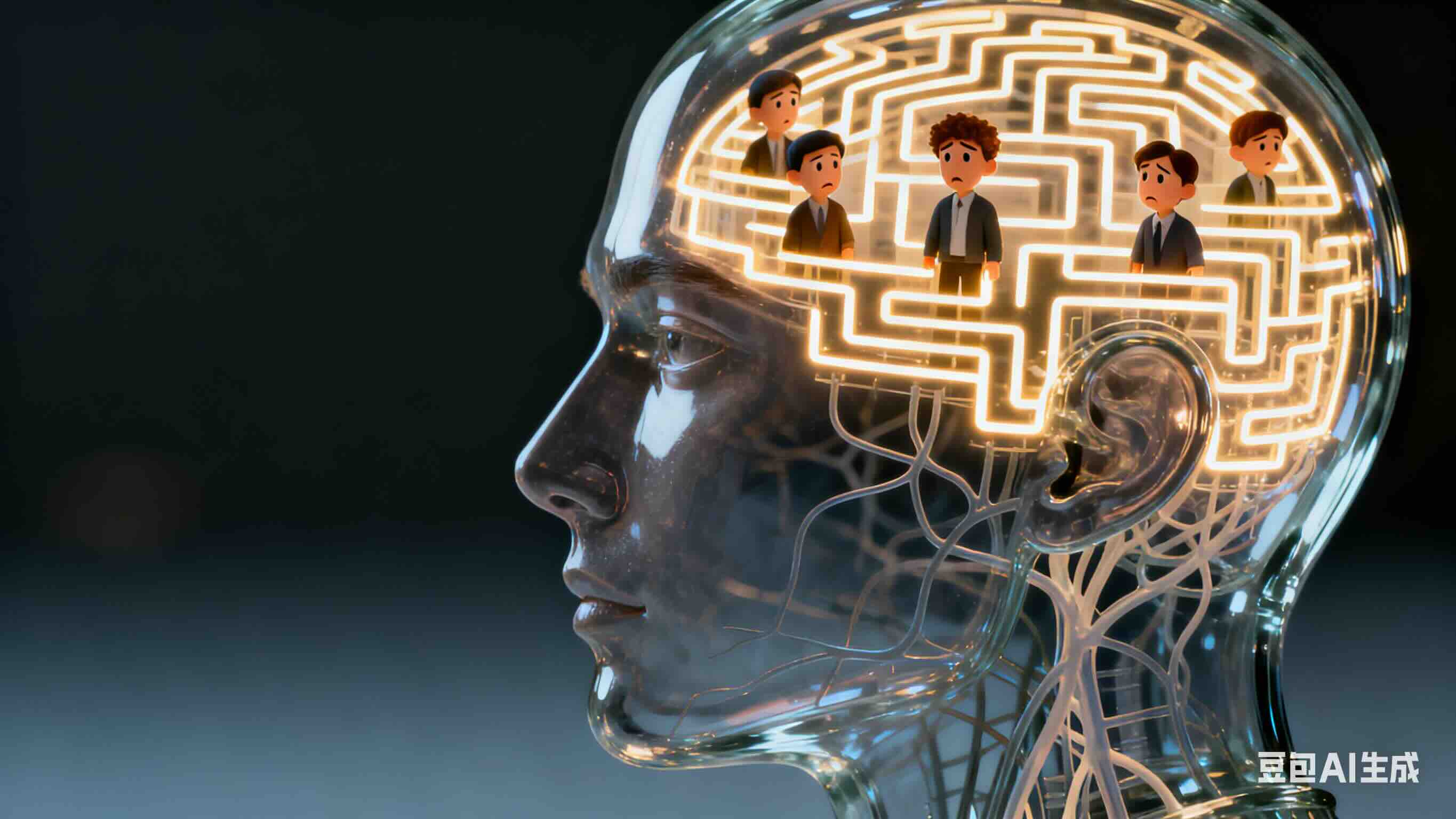
Have you ever walked away from a debate, only to realize hours later that your argument was based more on feeling than on fact? Or perhaps you've clung to a belief with unwavering certainty, dismissing any evidence to the contrary. If so, you're not alone. You're simply human, and your brain is wired with a series of mental shortcuts known as cognitive biases.
These biases aren't a sign of intellectual weakness. They're evolutionary tools our brains use to make quick judgments with minimal effort. But in our complex modern world, these shortcuts can often lead us down paths of error. Understanding these thinking traps is the first step toward making more rational, informed decisions. Let's shine a light on seven of the most common biases that silently shape your life.
7 Common Thinking Traps at a Glance
| Cognitive Bias | What It Is (In a Nutshell) |
|---|---|
| Confirmation Bias | You favor information that confirms what you already believe. |
| Dunning-Kruger Effect | You're too unskilled to see how unskilled you are. |
| Anchoring Effect | You rely too heavily on the first piece of information you receive. |
| Availability Heuristic | If you can recall it easily, you think it's more common than it is. |
| Survivorship Bias | You only see the winners, not the many who failed. |
| Bandwagon Effect | You adopt a belief because many others are doing it. |
| Halo Effect | Your overall impression of something colors your judgment of its specific traits. |
1. Confirmation Bias: The Mind's Echo Chamber
This is arguably one of the most pervasive thinking traps. It's our tendency to search for, interpret, and recall information in a way that confirms what we already believe. If you think a certain political candidate is dishonest, you'll actively seek out news articles that support this view while dismissing reports that portray them positively. Social media has supercharged this bias, creating personalized "echo chambers" that constantly reinforce our opinions. Curious about your own blind spots? Take our Confirmation Bias Test to find out.
2. The Dunning-Kruger Effect: Unskilled and Unaware of It
The Dunning-Kruger effect is a fascinating bias where individuals with low ability at a task overestimate their ability. In short, people can be too unskilled to recognize their own lack of skill. You've seen this in a novice driver who believes they have the skills of a professional, or an amateur investor who thinks they've mastered the stock market after a few lucky trades. The very knowledge required to assess one's performance is the knowledge they lack. If you're brave enough to challenge your own perceptions, the Dunning-Kruger Effect Test can offer some humbling insights.
3. The Anchoring Effect: The Power of the First Number
This is our tendency to rely too heavily on the first piece of information offered (the "anchor"). A store might display a jacket with an original price of $500, then offer it for $250. The $500 anchor makes the $250 price seem like a fantastic deal, even if the jacket's true value is only $150. To counteract this, you must consciously question the relevance of the first piece of information you receive. Think you're immune? Test your decision-making with our Anchoring Effect Test.
4. The Availability Heuristic: If It's Easy to Recall, It Must Be Common
This is a mental shortcut that relies on immediate examples that come to mind. We judge the likelihood of an event by how easily we can recall an example of it. This is why many people fear flying more than driving, despite statistics showing driving is far more dangerous. Plane crashes are rare but highly publicized, making them easy to recall and leading us to overestimate their likelihood. See how this might be shaping your own risk assessment with the Availability Heuristic Test.
5. Survivorship Bias: Focusing on the Winners
This is the error of concentrating on the people or things that "survived" a process while overlooking the vast number of failures. We're told stories of entrepreneurs who dropped out of college and founded billion-dollar companies, leading us to conclude it's a good strategy. We don't see the thousands who also dropped out but did not succeed. To overcome this, you must actively seek out the stories of failure: what went wrong?
6. The Bandwagon Effect: The Comfort of the Crowd
This is the tendency to adopt behaviors or attitudes simply because others are doing so. It's driven by our desire to conform. While sometimes useful (choosing a busy restaurant over an empty one), it can lead to decisions without critical thought. To counter this, ask yourself: "Am I doing this because I truly believe it's the right choice, or am I just following the herd?"
7. The Halo Effect: When One Good Trait Hides the Bad
The halo effect is where our overall impression of something influences our feelings about its specific traits. A classic example is attributing positive qualities like intelligence and kindness to someone who is physically attractive. We might assume a beautifully designed product is also durable, or trust a well-spoken politician. To avoid this, we must learn to evaluate different qualities independently.
How to Build a More Rational Mindset
Recognizing these biases is one thing; overcoming them is another. It requires conscious effort. Here are a few strategies:
- Acknowledge Your Biases: The first step is to accept that you are susceptible to these thinking traps. Humility is the foundation of rational thinking.
- Slow Down: Many biases arise from thinking too quickly. When faced with an important decision, pause and engage in more deliberate, analytical thought.
- Seek Disagreement: Actively look for information that challenges your assumptions. Make it a habit to play devil's advocate with your own beliefs.
- Consider the Opposite: Before making a final decision, ask yourself, "What are some reasons I might be wrong?" This simple exercise can reveal flaws in your logic.
Final Thoughts: The Journey to Clearer Thinking
Cognitive biases are not a personal failing but an inherent feature of the human mind. While we can never completely eliminate them, we can learn to recognize their pull and consciously choose to resist it. By understanding these thinking traps, you empower yourself to become a more critical thinker and a more astute decision-maker. The journey to clearer thinking is a lifelong endeavor, but it's one that brings immense rewards.